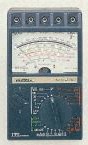
Multi-meters
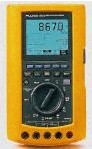
Automotive Technicians make ( or should make ) extensive use of multi-meters. Those useful tools have evolved from the slow and not so accurate analogue types to the modern digital types we see today. They come with different capabilities and options, some with automatic range selection, some with manual, some even with memory capabilities. What type one chooses to use is a personal preference, but if you need some guide lines here is list of useful things to look for.
Useful multi-meter features:
Aside from the "normal" measuring functions like DC Volts, AC Volts, AC Amps, DC Amps, Resistance and so on here are some other useful things that an Automotive multi-meter can ( should ) have.:
-
Large 4 digit Display ( e.g. 20.98 V ) the more the better
-
Capability to measure up to 20A ( at least 10A min.)
-
Capability to measure Frequency (Hz)
-
Capability to measure Capacitance ( mF )
-
Capability to measure RPM ( engine RPM with additional Pick-Up, or directly from the coil primary -1)
-
Capability to display Minimum and Maximum measured values
-
Capability to measure Temperature
-
Some expensive ones even come with some oscilloscope capabilities ( very handy but still pricey)
-
Capability to connect to a PC ( useful for printing and other tricks )

Useful Conversions:
-
Ignition Frequency into RPM - ( 120 / Number of Cylinders x Frequency = RPM )
-
Engine RPM into Ignition Frequency ( in Cycles per Second ) - ( Number of Cylinders / 120 x RPM = Frequency )
-
Microseconds to Seconds - ( microseconds x 1000000 = Seconds )
-
Milliseconds to Seconds - ( milliseconds x 1000 = Seconds )
-
Seconds to milliseconds - ( seconds x 0.001 = milliseconds )
-
Seconds to microseconds ( seconds x 0.000001 = microseconds )
-
Frequency into Time - ( 1 / Frequency in Hz = Time in seconds )
-
Time into Frequency - ( 1 / Time in seconds = Frequency in Hz )
-
or ( 1000 / Time in milliseconds = Frequency in Hz )
-
or ( 1000000 / Time in microseconds = Frequency in Hz )
-
Note: 1000 Hz = 1 KHz ( one thousand Hertz = 1 kilohertz )
Analogue VS Digital
Despite some limitations our choice goes for the Digital ones, simply because they offer much more in a single package!
Some limitations regarding use of Digital Multimeters for automotive diagnostics:
-
Due to the high impedance nature of their inputs, digital multimeters DO NOT load the circuit under question. This is good, because it will not damage the circuit, but IT IS BAD for some automotive electrical jobs where we want to hunt down loose terminals or other voltage drops! In other words, you may have 12v on a wire under test, but when you connect a load to it, say an relay and it's still not working, the problem may be a voltage drop which digital multimeter can only pick up if you measure the whole circuit under load. e.g. the relay coil loads the 12v line which will drop it's voltage if we have loose connections. ONLY measure with all circuit components connected to avoid misleading.
-
Due to their nature the digital multimeters tend to "skip" some of the signal. An analogue multimeter will tremble it's needle rapidly if the signal changes back and forth, but you'll get a clear picture of the "range" of fluctuations. Say you measure an ABS wheel sensor. The digital on other hand will give you some positive value and the some negative value but because the "sample" it displays to you is not synchronized you'll get inconsistent values which are meaningless. ( This is not the case with Digital's that have "Min." & "Max." value capabilities!)
Once you are aware of the above limitations and proceed with care the Digital Multimeter should be you choice of meter, in most cases anyway.
